What is printmaking?
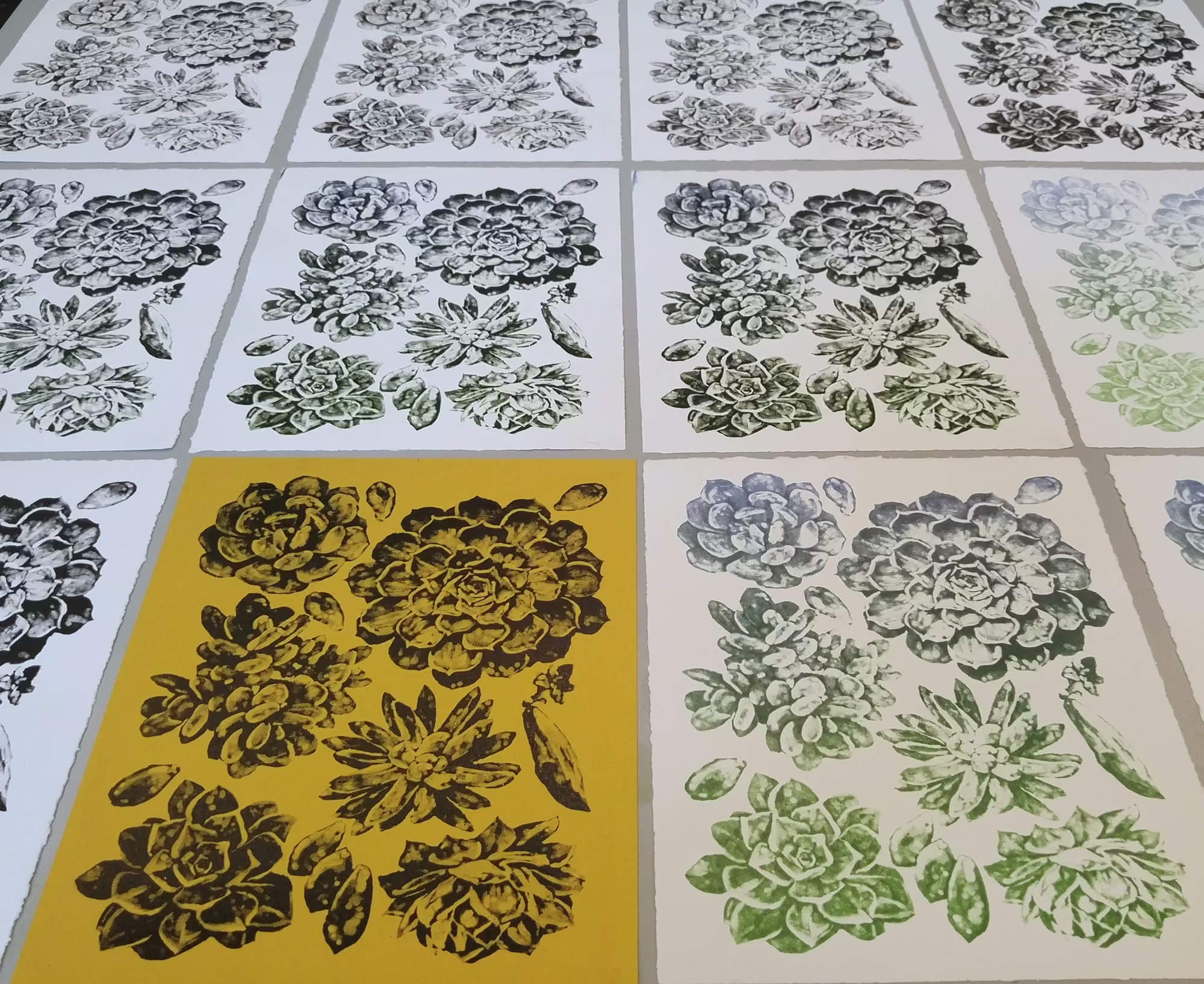
A varied edition of lithographs titled "Portals". Source: Lauren Alexander
Table of contents
Printmaking is a process-based art practice in which an artist creates images by transferring ink from a prepared surface—called a matrix—onto paper or another material, such as fabric.
Unlike a single drawing or painting, printmaking allows artists to produce multiple original artworks, each printed from the same matrix and considered part of a limited edition.
In printmaking, the artist is directly involved in every stage of the process, from developing the image and preparing the matrix to printing and signing each individual impression.
What does “printmaking” mean in art?
In an art context, printmaking refers specifically to original, artist-made prints, not mass-produced copies or reproductions.
In academic, museum, and gallery settings, this practice is often referred to as “fine art printmaking.” This term is used to distinguish original prints made through a printmaking process from commercial or mass-produced reproductions. On this site, both terms refer to the same process-based practice of creating original prints directly from a matrix.
Common printmaking examples include woodcut prints, etchings, lithographs, screenprints, and monotypes.
Key characteristics of printmaking
Editioned works
Prints are typically produced in limited editions. Each print is signed and numbered by the artist, indicating its place within the edition.
The matrix
The matrix is the surface used to create the print. It may be a wood block, metal plate, stone, screen, or another material. The artist works directly on this surface to create the image.
Originality
Although multiple impressions are created, each print is considered an original artwork because it results from the artist’s direct process rather than being copied from an existing image.
A brief history of printmaking
Printmaking has been used for centuries to produce images, share ideas, and communicate visually. Early forms of woodblock printing developed in China, while woodcut and engraving became widespread in Europe during the Middle Ages and Renaissance.
Over time, new printmaking techniques like etching, lithography, and screenprinting expanded the visual and expressive possibilities of printmaking. Long before photography or digital media, printmaking played a central role in the spread of artistic styles, political commentary, and cultural exchange.
Today, printmaking continues to evolve as artists combine traditional techniques with modern materials, experimental approaches, and digital technologies.
The main types of printmaking
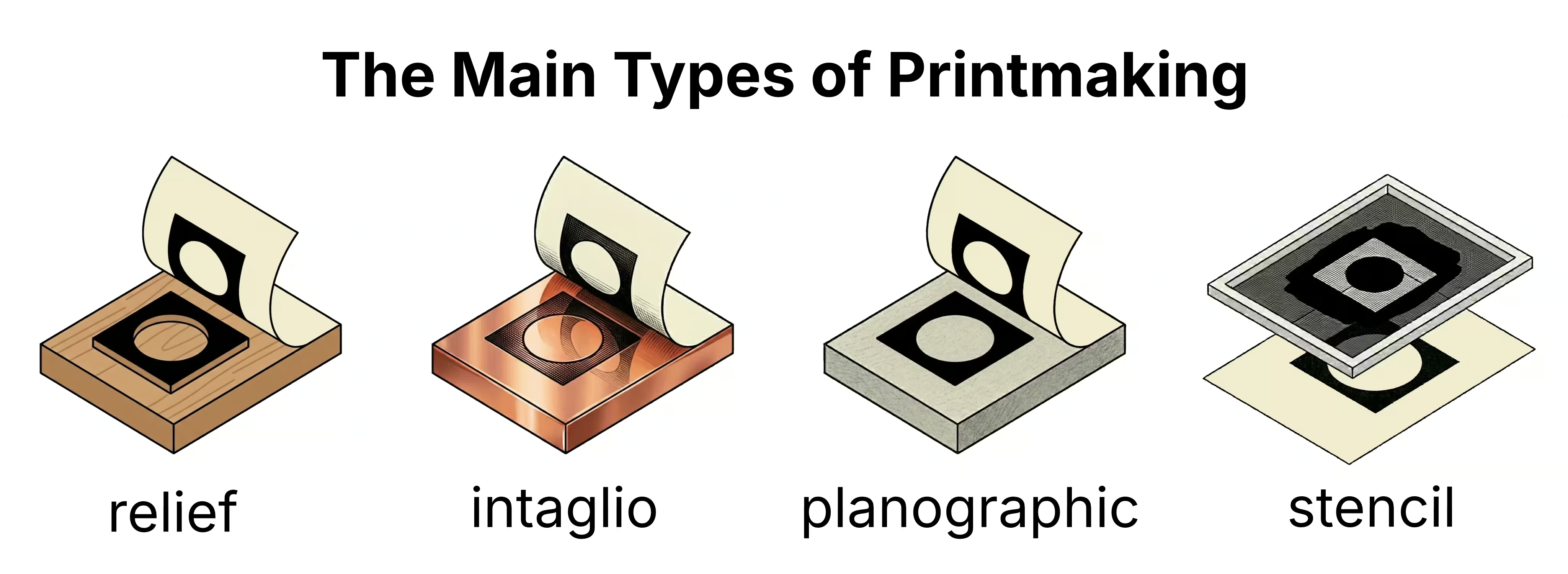
Printmaking types (also called categories) describe how ink is transferred from the matrix to the paper or other printing surface. Most printmaking processes fall into one of these core types. These types can also be combined, allowing artists to create hybrid prints that use more than one printmaking method.
Relief printmaking
In relief printmaking, ink is transferred from the raised surface of the matrix, while carved or cut-away areas remain unprinted.
Common relief processes include woodcut, linocut, and letterpress.
Intaglio printmaking
In intaglio printmaking, ink is transferred from recessed or incised lines below the surface of the matrix.
Intaglio printing processes include engraving, etching, and mezzotint.
→ Explore intaglio printmaking
Planographic printmaking
In planographic printmaking, ink is transferred from a flat surface, where image areas are chemically differentiated from non-image areas.
The most well-known planographic process is lithography.
→ Explore planographic printmaking
Stencil printmaking
In stencil printmaking, ink is transferred through open areas of a stencil onto the printing surface, while blocked areas remain unprinted.
Screen printing and pochoir are common stencil-based processes.
Digital printmaking
In digital printmaking, images are printed from digital files onto a printing surface using archival printing methods. Digital processes may be used on their own or combined with other printmaking processes as part of a hybrid workflow.
When created as original prints, digital works are typically editioned and controlled by the artist.
Printmaking types and processes
In printmaking, terms like type and process are used to describe different levels of organization. On this website, printmaking is organized using two simple levels: types and processes.
Printmaking types describe the overall approach to printing, based on how ink is transferred from a matrix to a printing surface. The type explains the basic principle behind how a group of printmaking processes works and provides a framework for understanding how different processes relate to one another.
Printmaking processes are the specific methods artists practice within a type of printmaking. A process explains what kind of matrix is used and how the image is created and printed.
For example:
- Relief is a type of printmaking; linocut is a process.
- Intaglio is a type of printmaking; etching is a process.
- Planographic is a type of printmaking; lithography is a process.
- Stencil is a type of printmaking; screenprinting is a process.
Each process may involve different materials, tools, and working methods, which are explored in more detail on their own pages.
Understanding this organizational structure makes it easier to explore, compare, and navigate printmaking—especially when learning new methods or deciding where to dive deeper next.
How a print is made: a general overview
While each printmaking process has its own steps and variations, many follow a similar overall workflow:
- The artist develops an image or design
- A matrix is prepared through carving, drawing, or chemical processes
- Ink is applied to the matrix
- Paper or another suitable printing surface is placed onto the matrix
- Pressure is applied using a press or hand-printing tools
- The print is lifted, revealing the image
This process is repeated for each impression in an edition.
Original prints vs. reproductions
A common point of confusion is the difference between an original print and a reproduction.
Original prints are created directly by the artist using a printmaking process. The image is made specifically to be printed, and each impression is pulled from a matrix as part of the artist’s process.
Reproductions are copies of an existing artwork, such as a painting or drawing, and are often produced digitally or mechanically.
In printmaking, the print itself is the original artwork—not a copy of one.
Who uses printmaking today?
Printmaking is embedded in everyday life—from currency and packaging to books and textiles—but in an art and creative context, it is practiced by a wide range of people, including artists, illustrators, designers, educators, and students.
Prints appear in galleries, books, posters, textiles, and mixed-media works.
Traditional, contemporary, and experimental printmaking
Printmaking has a long history, with techniques such as woodcut and engraving playing a major role in the spread of images and ideas long before photography and digital media.
Today, many artists continue to practice traditional printmaking methods, while others blend techniques across processes or incorporate new materials and technologies. Contemporary and experimental printmaking may combine hand-carved matrices with photographic imagery, digital tools, or unconventional surfaces.
These approaches expand what printmaking can be while remaining rooted in process-based image making and the artist’s direct involvement.
How printmaking differs from drawing and painting
While drawing and painting produce a single, one-of-a-kind artwork, printmaking is defined by multiplicity—the ability to create multiple original prints from a single matrix.
Key differences include:
- Multiple original prints rather than a single piece
- Process-driven creation using a printmaking matrix
- Consistency with variation, as no two prints are exactly identical
Despite these differences, printmaking remains closely connected to drawing and painting, often incorporating hand-drawn elements at multiple stages of the process.
Common printmaking questions
What makes a print an original?
An original print is created directly by the artist through a printmaking process, not copied from an existing artwork.
Is printmaking considered an art form?
Yes. Printmaking is a recognized art form that involves creating original works through a process-based method using a matrix.
Do all prints have to be limited editions?
No. Many original prints are editioned, but some processes—such as monotype—produce one-of-a-kind prints. Edition size depends on the process and the artist’s intent.
Can prints be valuable?
Yes. Many prints are collected, exhibited, and sold as original artworks, including in galleries and museums.
How are prints signed and numbered?
Prints are typically signed in pencil and numbered as a fraction, such as 5/25, where the first number indicates the print’s position within the edition and the second number indicates the total number of prints in the edition.
How is printmaking different from photocopying?
Printmaking involves manual, process-based creation of an original image, while photocopying mechanically reproduces an existing image.
Is “fine art printmaking” different from “printmaking”?
The term “fine art printmaking” is commonly used in institutional contexts, but it refers to the same process-based practice of creating original prints directly from a matrix.