Planographic printmaking
The printing surface is completely flat, and printing happens because image and non-image areas are chemically different. Ink sticks only to the treated areas and avoids the rest.
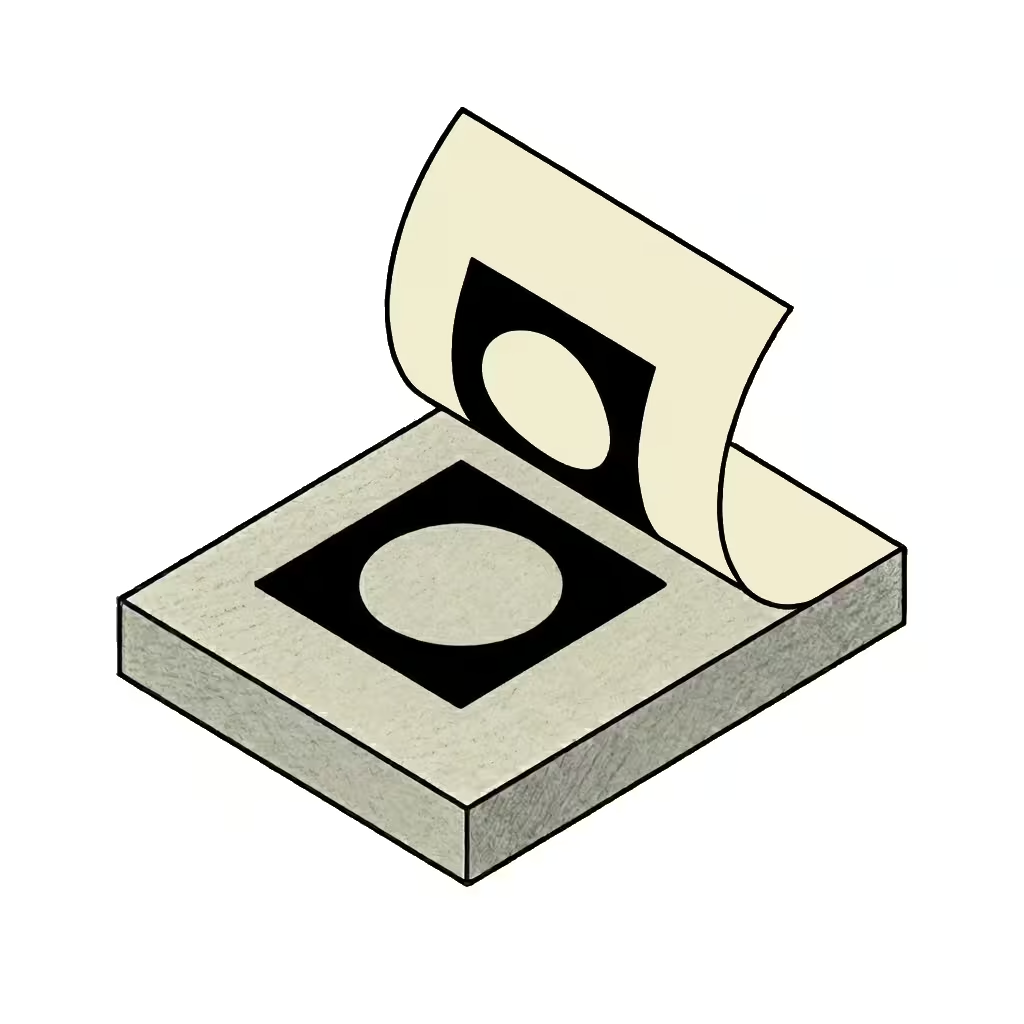
Table of contents
Planographic printmaking is a type of printmaking in which ink is transferred from a flat printing surface rather than from raised or recessed areas. The image is created through chemical separation—not physical depth—so ink adheres to certain areas of the surface while being repelled from others.
This approach is often referred to as planographic printing, and it is most closely associated with lithography, the primary planographic printmaking process.
What is planographic printmaking?
Planographic printmaking is defined by the fact that the printing surface remains level and uncarved. Unlike relief printmaking (raised surfaces) or intaglio printmaking (incised lines), planographic methods rely on the natural resistance between oil-based ink and water or other chemical treatments on a flat surface.
In simple terms:
- The surface stays flat
- No areas are cut, carved, or etched
- Ink sticks only where the artist intends, based on chemical properties
The word "planographic" comes from the idea of printing from a plane, or flat surface.
Planographic printmaking includes processes such as lithography and monotype, all of which print from flat, uncarved surfaces.
How planographic printmaking works
Although specific methods vary, planographic printmaking follows the same core principle:
- An image is created on a flat surface
The artist draws or treats areas of the surface so they will attract ink while other areas repel it. - Ink and water interact on the surface
Oil‑based ink and water do not mix, so treated image areas accept ink while non‑image areas hold water and resist ink. - Ink transfers from the flat surface to paper
Paper is pressed against the surface, transferring the inked image without relying on raised or recessed areas.
Because the image is defined chemically rather than physically, planographic prints can achieve subtle tonal shifts and fluid mark-making that are difficult to replicate in other printmaking types.
Key characteristics of planographic prints
Planographic prints often share these traits:
- Flat printing surface
There is no physical relief or indentation created by the printing matrix. - Smooth tonal transitions
Planographic methods are well suited to gradients, washes, and soft textures. - Painterly or drawn qualities
Marks often resemble drawing, brushwork, or handwriting. - No plate mark
Because the surface is flat, planographic prints typically do not show a plate indentation.
Common planographic printmaking processes
Planographic printmaking includes a small number of processes that rely on flat printing surfaces rather than raised or recessed areas.
Lithography
Lithography is the most widely known planographic printmaking process. It is based on the natural repulsion between grease and water and was traditionally done on limestone, with metal plates introduced later as the process evolved.
Monotype
Monotype is a planographic printmaking process in which an image is created on a smooth, flat surface—such as metal, glass, or acrylic—and transferred to paper. Unlike most printmaking processes, monotype typically produces a single, unique print rather than an edition.
Offset lithography
Offset lithography is a later development in which the image is transferred indirectly from the printing surface to another material before reaching the paper. While commonly used in commercial printing, it is conceptually rooted in planographic principles.
Planographic printmaking in art and visual culture
Planographic printmaking has played a significant role in both fine art and mass communication. Artists have used planographic methods for their ability to capture expressive marks, tonal complexity, and a direct relationship between drawing and print.
Today, planographic techniques continue to be used in:
- Fine art printmaking
- Experimental and mixed-media work
- Educational and studio settings
Even as digital methods have expanded, planographic printmaking remains an important bridge between drawing, painting, and printing.
Planographic vs other printmaking types
Planographic printmaking is best understood in relation to other printmaking types:
Planographic vs relief printmaking
Relief printing transfers ink from raised surfaces. Planographic printing uses a flat surface with no carved areas.
Planographic vs intaglio printmaking
Intaglio printing transfers ink from recessed lines below the surface. Planographic printing relies on chemical separation, not depth.
Planographic vs stencil printmaking
Stencil printing transfers ink through open areas. Planographic printing transfers ink directly from the surface itself.
Each type is defined by a fundamentally different method of ink transfer.
Common misconceptions about planographic printmaking
Because the term planographic is less familiar than other printmaking categories, confusion is common.
- Linocut is not planographic
Linocut is a relief printmaking process because ink is transferred from raised surfaces. - Screen printing is not planographic
Screen printing is a stencil-based process, not a planographic one. - Flat does not mean simple
Although the surface is flat, planographic printmaking can involve complex preparation and careful control of materials.
Clarifying these distinctions is essential to understanding how printmaking works as a whole.
How to explore planographic printmaking on World of Printmaking
This page introduces planographic printmaking as a printmaking type. To explore further, individual planographic printmaking processes—such as lithography—are covered in more detail on their own pages.
World of Printmaking is structured to help you understand:
- How different printmaking types work
- What makes each process distinct
- How techniques relate without being confused or collapsed
Planographic printmaking may be less widely discussed than other types, but it is a foundational part of printmaking history and practice.