Intaglio printmaking
Ink sits below the printing surface, inside incised or recessed lines. The raised areas are wiped clean, and the ink in the grooves prints when pressure transfers it onto the paper.
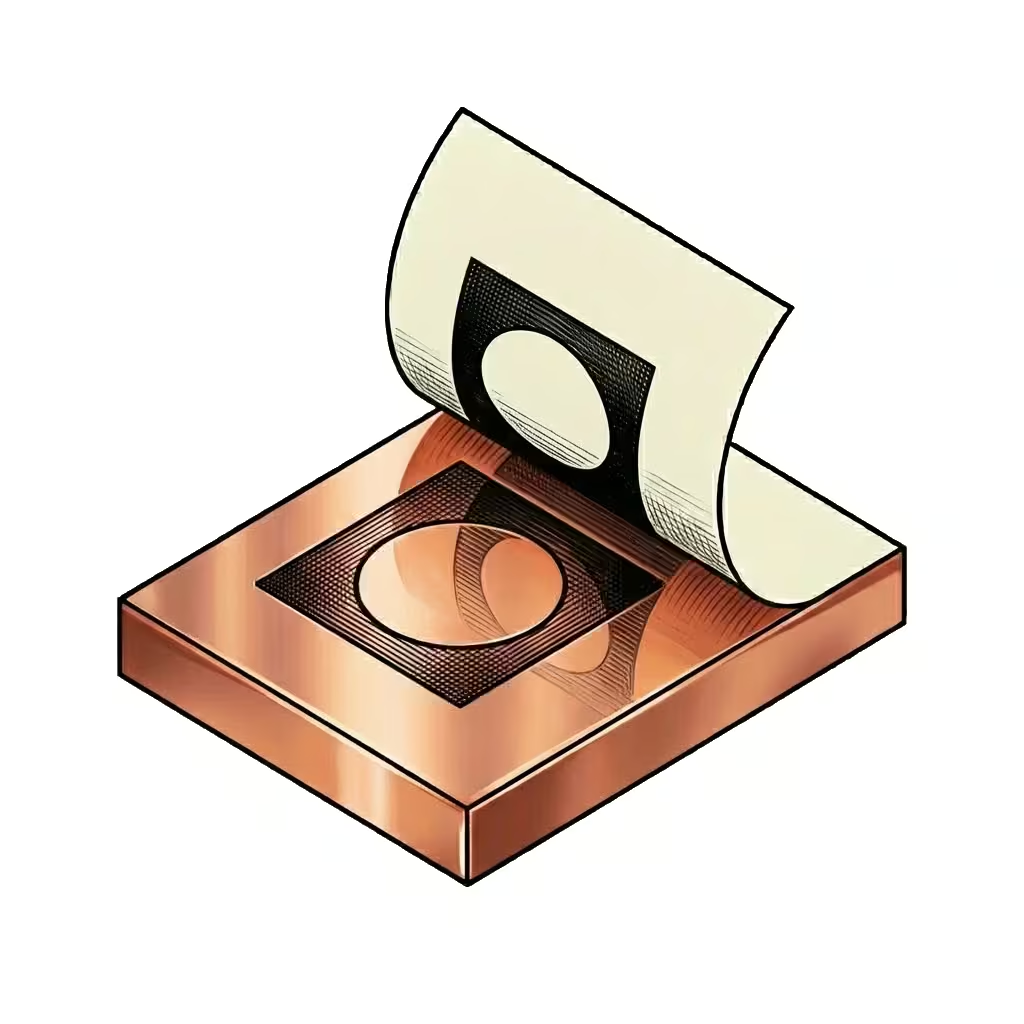
Table of contents
Intaglio printmaking is a type of printmaking in which ink is held below the surface of a printing plate and transferred onto paper using pressure. Unlike relief printmaking, where raised areas print, intaglio prints are created from incised or recessed lines that carry ink.
This method is often referred to as intaglio printing or intaglio printmaking, and it includes processes such as etching, engraving, drypoint, aquatint, and mezzotint.
What is intaglio printmaking?
Intaglio printmaking is defined by where the ink sits on the matrix (the surface being printed from). In intaglio, the artist creates marks into a plate—rather than on top of it. Ink settles into those recessed lines or textures, while the surface of the plate is wiped clean.
When damp paper is pressed against the plate under high pressure, the paper is pushed down into the ink-filled lines and pulls the ink out, creating the printed image.
In simple terms:
- Lines are cut, scratched, or bitten into the plate
- Ink is below the surface
- Pressure forces paper into those lines to pick up ink
How intaglio printmaking works
Although specific processes vary, all intaglio printing follows the same fundamental steps:
- Preparing the plate
The artist works on a plate—traditionally metal such as copper or zinc—creating lines or textures below the surface. - Inking the plate
Ink is spread across the entire plate so it fills the recessed marks. - Wiping the surface
The surface of the plate is carefully wiped clean, leaving ink only in the incised areas. - Printing under pressure
Damp paper is placed on top of the plate and run through a press. The pressure pushes the paper into the recessed lines, transferring the ink.
This high-pressure transfer is essential to intaglio and is what gives many intaglio prints their characteristic depth and tactile quality.
Key characteristics of intaglio prints
Intaglio prints tend to share several visual and physical traits:
- Fine, controlled lines
Intaglio allows for extremely detailed line work, from razor-sharp engravings to soft, velvety marks. - Rich ink quality
Because ink sits in grooves, intaglio prints can appear darker and more saturated than other print types. - Plate mark
The pressure of the press often leaves a visible indentation around the edge of the plate, known as a plate mark. - Subtle texture
Depending on the process, printed lines may appear raised or slightly embossed in the paper.
Common intaglio printmaking processes
Intaglio is a printmaking type, not a single method. Several distinct processes fall under this category:
Etching
Etching is an intaglio printmaking process in which lines are created using acid to bite into a metal plate where it has been exposed.
Engraving
Engraving is an intaglio process in which lines are cut directly into the plate using sharp tools rather than acid.
Drypoint
Drypoint is an intaglio process where the plate is scratched directly, creating burrs that produce soft, fuzzy lines when printed.
Aquatint
Aquatint is an intaglio process used to create tonal areas rather than lines, allowing for washes and gradients of value.
Mezzotint
Mezzotint is an intaglio process that builds images from dark to light by smoothing areas of a roughened plate.
Each of these is a separate printmaking process, but all are intaglio because the ink is printed from recessed areas.
Intaglio printmaking in art and visual culture
Intaglio has played a major role in the history of printed images, particularly where detail, precision, and tonal control were required. It has been used for:
- Illustrations and book plates
- Maps and scientific imagery
- Fine art prints
- Currency and security printing
Today, artists continue to use intaglio both in traditional ways and in experimental or hybrid practices, often combining it with other printmaking types or contemporary materials.
Intaglio vs. other printmaking types
Understanding intaglio is often easier when compared to other printmaking types:
Intaglio vs. relief printmaking
Relief printmaking transfers ink from raised surfaces of the matrix. Intaglio printmaking transfers ink from recessed lines or grooves below the surface.
Intaglio vs. planographic printmaking
Planographic printmaking transfers ink from a flat surface using chemical separation rather than physical depth. Intaglio printmaking relies on incised lines or textures to hold ink below the surface.
Intaglio vs. stencil printmaking
Stencil printmaking transfers ink through open areas while blocked areas prevent ink from reaching the surface. Intaglio printmaking transfers ink directly from recessed marks in a plate.
Each type is defined by a fundamentally different ink-transfer method.
Can intaglio be combined with other processes?
Yes. Intaglio is often combined with other printmaking processes within a single print. For example, an artist might use etching for line work and aquatint for tonal areas on the same plate.
Intaglio prints can also be combined with relief, planographic, or stencil techniques in layered or mixed-media works, as long as each process is used intentionally and distinctly.
How to explore intaglio on World of Printmaking
This page provides an overview of intaglio printmaking as a type. To go deeper, explore individual intaglio printmaking processes, where each method is explained in detail with its own materials, mechanics, and visual outcomes.
World of Printmaking is structured to help you understand:
- What kind of printmaking you’re looking at
- How it works
- Why artists choose it
Whether you are new to printmaking or refining your understanding, intaglio is one of the most important printmaking types to know.