Relief printmaking
Ink sits on the raised parts of the printing surface, and only those raised areas print. The carved-away or recessed areas stay white because they don’t receive ink.
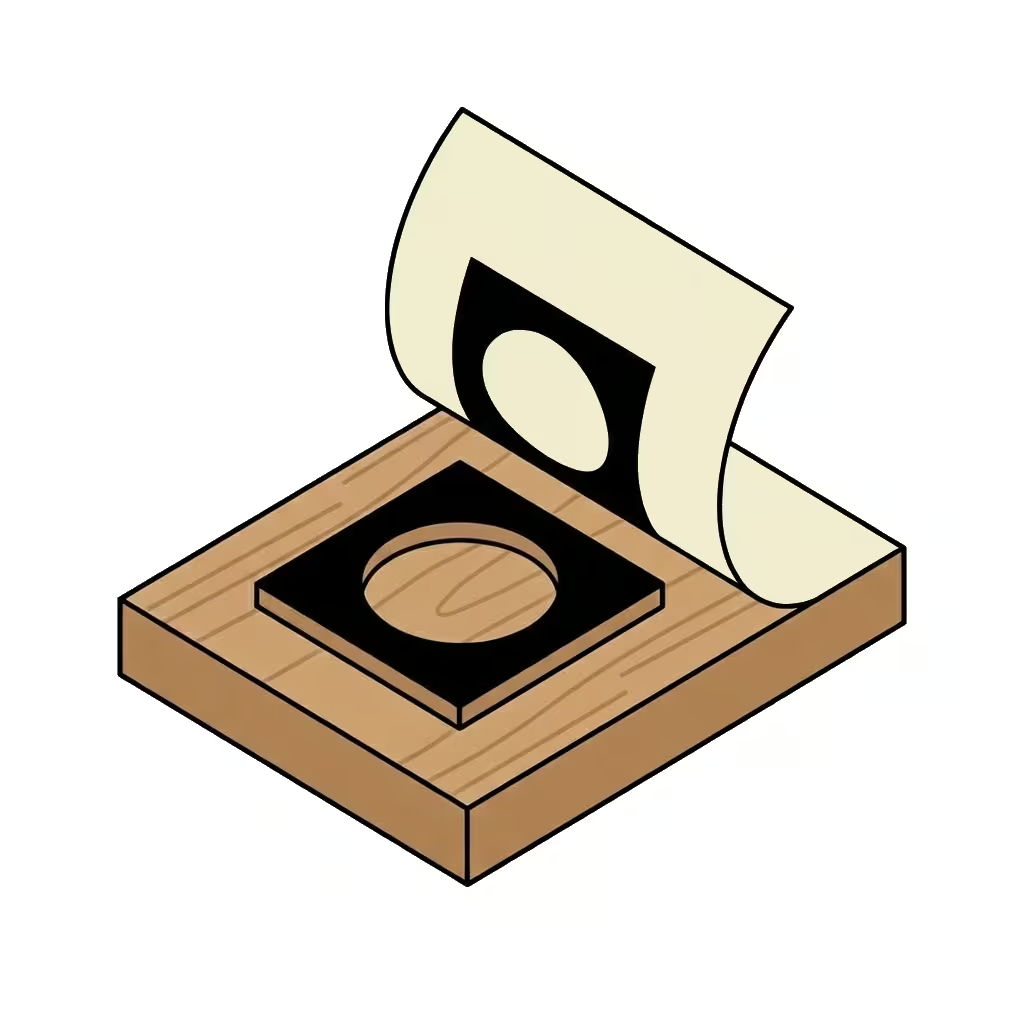
Table of contents
Relief printmaking—often called relief printing—is a type of printmaking in which ink is transferred from the raised surface of a matrix (the surface being printed from), while carved or cut-away areas do not print.
It is one of the oldest and most widely practiced printmaking types, with roots across many cultures and historical periods.
In relief printmaking, the artist removes material from the surface of the matrix so the image is left behind, then inks the raised surface and transfers it to paper or another printing surface using pressure.
What is relief printmaking?
Relief printmaking is defined by how ink is transferred from the matrix. Ink sits on the raised surface, while recessed areas remain uninked, creating the printed image.
Relief prints are often characterized by strong contrast, bold marks, and a direct physical relationship between the artist and the material.
Relief printing can be done by hand or with a press, using matrices made from wood, linoleum, rubber, metal, cardboard, or other materials (even potatoes!).
How relief printing works
While individual relief processes vary, the basic relief printing workflow follows a shared structure:
- The artist designs an image
- Material is carved, cut, or removed from the matrix to define non-image areas
- Ink is rolled onto the leftover raised surface of the matrix
- Paper or another printing surface is placed on top of the matrix
- Pressure is applied by hand or with a press
- The paper is lifted to reveal the printed image
This process is repeated for each impression in an edition.
These steps form the foundation for many relief printmaking processes, from traditional woodcut to contemporary linocut and experimental relief processes.
Common tools for relief printing include carving tools, brayers, and printing ink. Detailed information about materials and tools appears on individual process pages.
Key characteristics of relief printmaking
Relief printmaking is known for several defining qualities:
- Bold visual impact due to strong contrast between inked and non-inked areas
- Graphic clarity, making it well suited for expressive marks and simplified forms
- Tactile, hands-on processes that emphasize carving and cutting
- Repeatability, allowing artists to create multiple original prints from a single matrix
Because of these qualities, relief printing has been used historically for fine art, illustration, books, posters, and textiles.
Common relief printmaking processes
Relief printmaking includes a wide range of processes, each defined by the material used for the matrix and the way it is worked. Common relief processes include:
Woodcut
Woodcut is a relief printmaking process in which an image is carved into a wooden block, leaving raised areas that receive ink and transfer the image to paper.
Wood engraving
Wood engraving is similar to woodcut but is done on the end grain of hardwood, allowing for finer detail and more precise line work.
Mokuhanga
Mokuhanga is a Japanese form of woodblock printing that uses water-based inks and hand printing rather than a press.
Linocut (linoleum relief printing)
Linocut is a relief printmaking process that uses linoleum as the matrix, making it easier to carve than wood. It is often considered beginner-friendly and is well suited to bold, graphic designs.
Letterpress
Letterpress is a relief printing process that uses raised type or images to print text and graphics, traditionally for books and printed materials.
Metal relief
Metal relief uses thin sheets of metal that are cut, punched, or embossed so raised areas can be inked and printed.
Rubber stamp
Rubber stamp printing uses carved or molded rubber surfaces to transfer inked images, often in repetitive or decorative applications.
Potato printing
Potato printing is a simple relief process where shapes are carved into a potato and printed, often used for educational or introductory purposes.
Cardboard cut
Cardboard cut uses layered or cut cardboard as a relief surface, allowing for quick, experimental, or low-cost printing.
Each of these processes has its own tools, materials, and traditions, which are explored in more detail on their individual pages.
Relief printmaking in art and visual culture
Relief printmaking has played a central role in the history of image-making. Early woodblock prints were used to reproduce texts and images long before photography or digital media existed, helping spread ideas, religious imagery, and visual narratives.
Today, relief printing continues to be used by artists working in traditional, contemporary, and experimental contexts. Relief techniques appear in galleries, studios, classrooms, book arts, textiles, and mixed-media practices.
Examples of relief prints include woodcut illustrations, linocut posters, letterpress invitations, Japanese mokuhanga prints, and experimental relief works combining multiple processes.
Relief printmaking vs other printmaking types
Relief printmaking is best understood in relation to other printmaking types, each defined by how ink is transferred from the matrix:
Relief vs intaglio printmaking
Relief printmaking transfers ink from raised surfaces of the matrix. Intaglio printmaking transfers ink from recessed lines or grooves below the surface.
Relief vs planographic printmaking
Relief printmaking relies on carved or cut surfaces to create raised image areas. Planographic printmaking prints from a flat surface using chemical separation rather than physical depth.
Relief vs stencil printmaking
Relief printmaking transfers ink from raised areas of a solid matrix. Stencil printmaking transfers ink through open areas while blocked areas prevent ink from reaching the surface.
Understanding these differences helps clarify why certain marks, textures, and visual effects are associated with specific printmaking processes.
Can relief printing be combined with other processes?
Yes. While relief printmaking is its own type of printmaking, artists often combine relief processes with other printmaking methods. For example, a relief print might incorporate stencil printing for layered color or be combined with digital processes in a hybrid workflow.
These combinations are common in contemporary and experimental printmaking.
How to explore relief printmaking on this site
On World of Printmaking, relief printmaking is explored in depth through dedicated process pages. Each process page focuses on a specific relief method, such as woodcut or linocut, and explains how it works, how it is used, and how it fits within printmaking history and practice.
If you’re ready to dive deeper, start by exploring the individual relief printmaking processes.